Missed Call Text-Back for Dental Clinics: Rebook the Patient Before They Ring Someone Else
Missed call text-back for dental clinics: an AI receptionist texts every unanswered caller within seconds and rebooks them. What it costs and how to size it.

Missed call text-back for dental clinics works like this: when a patient rings and nobody answers, they get a text within seconds that names your practice, offers a way to book, and invites a reply. Paired with an AI receptionist that can hold that conversation and write the appointment into your diary, a missed call becomes a rebooked patient instead of a voicemail you hear about tomorrow. I think it is the cheapest fix for a dental practice that is quietly losing new patients to a ringing phone, and the rest of this article shows how it works, what it costs and how to size it for your own clinic.
What is missed call text-back for a dental clinic?
Missed call text-back is an automation that detects an unanswered call and replies by message before the caller has dialled the next practice on their list. The text uses your clinic's name, says something human ("Sorry we missed you, we are with patients right now"), and gives a clear next step: a booking link, or a prompt to reply with what they need.
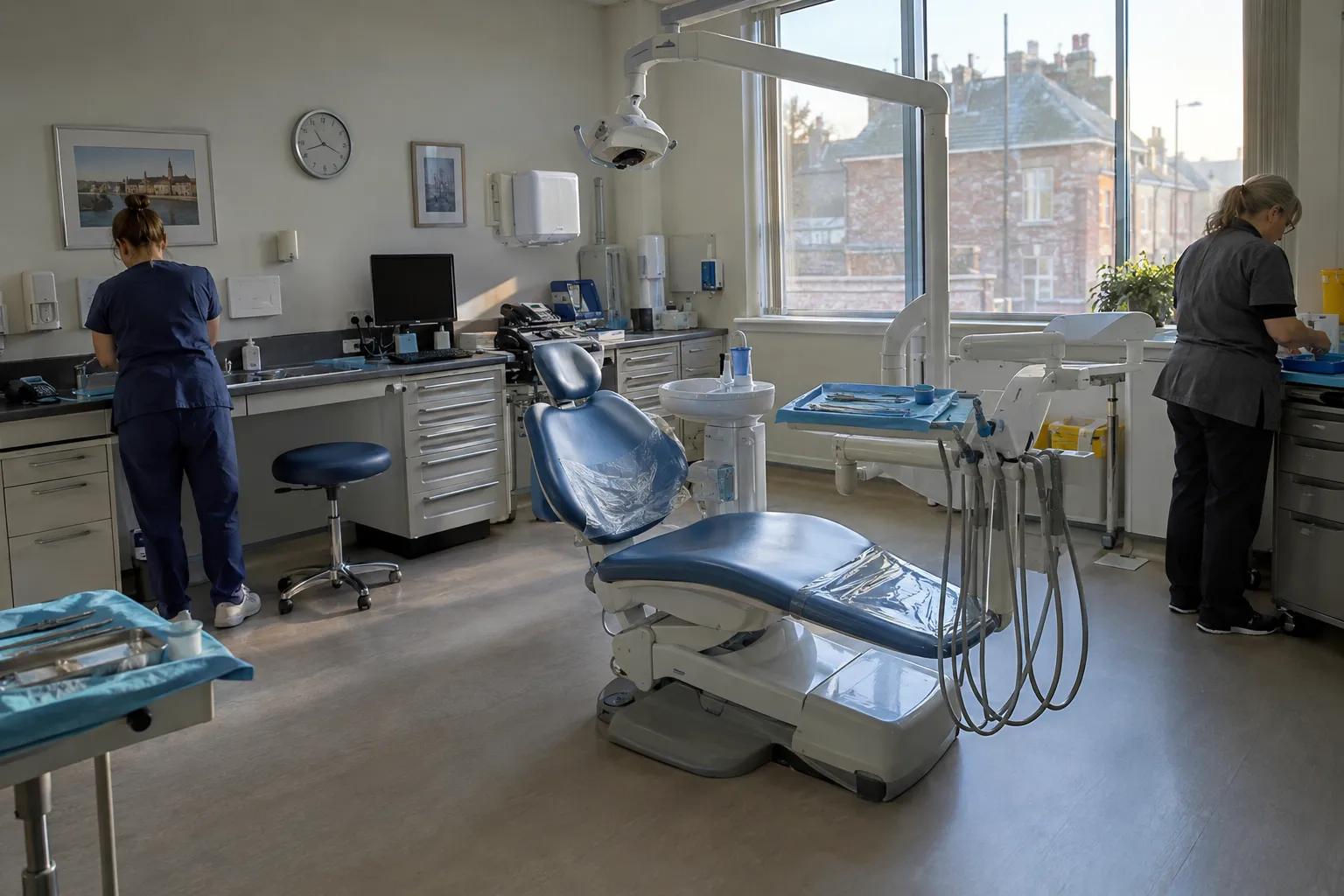
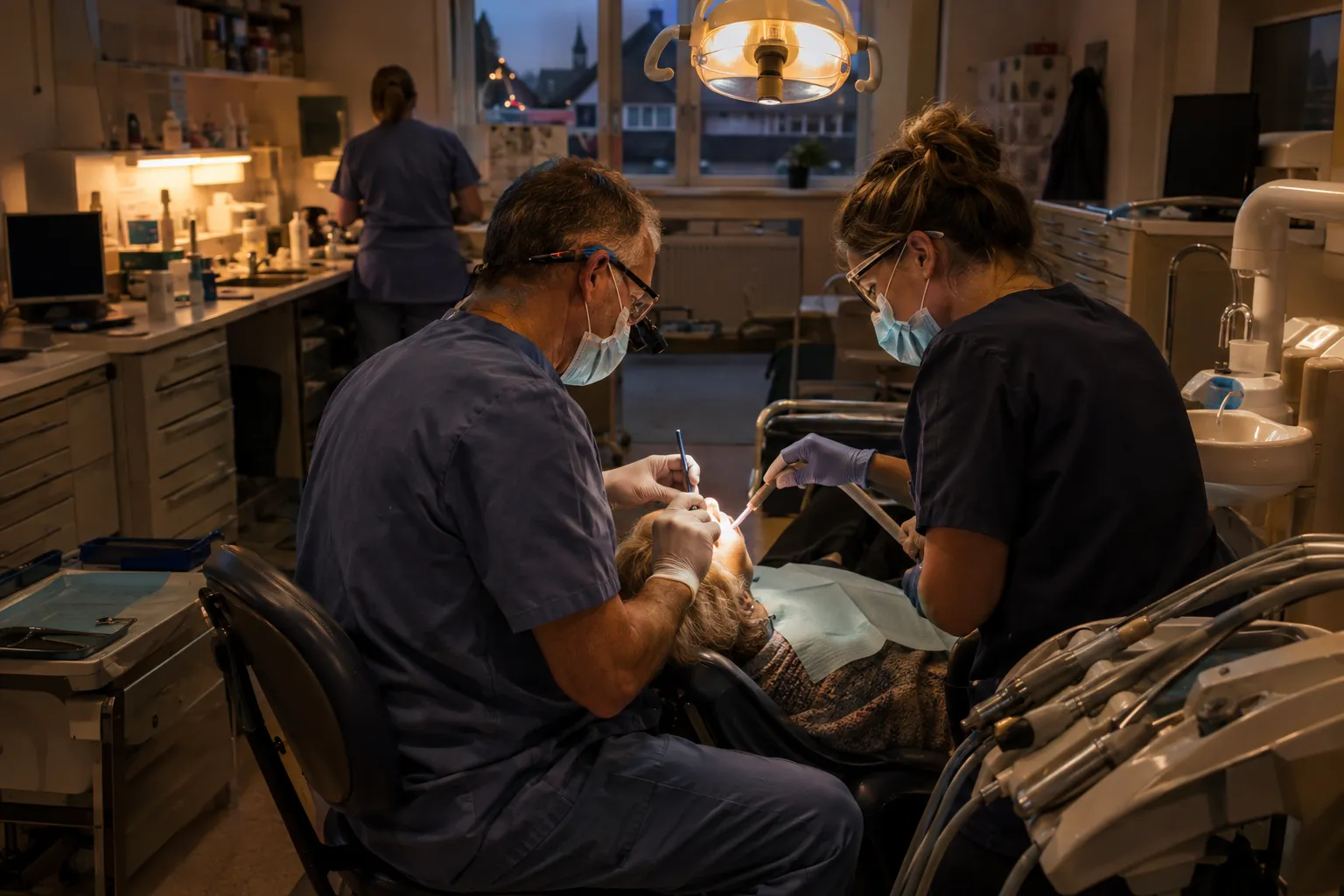
Dental is a particularly good fit because of how the work is organised. When the dentist and the nurse are both chairside, the person who would normally answer is the person holding the suction. Receptionists are often covering the desk, checking patients in and taking payments. The phone rings anyway. The caller is frequently in pain, or has just decided to finally book a check-up, and that decision has a short shelf life.
How does an AI receptionist rebook a missed caller?
An AI receptionist rebooks a missed caller by turning the text into a two-way conversation that ends in a confirmed slot in your calendar. A plain "please call us back" text just moves the problem. The version worth paying for does the work.
Here is the flow I would build for a typical practice:
- A caller rings at 10:40 while the whole team is in treatment. Nobody picks up.
- Within seconds the caller gets a text from the clinic's own number: a greeting, a line saying the team is with patients, and a question about what they need.
- The caller replies "I have a toothache, anything today?" The assistant checks the live diary and offers two or three real slots, asks for a name and a contact detail, and confirms.
- The appointment appears in your calendar, tagged as a recovered missed call. If it is an emergency the assistant cannot safely handle, it flags the message to a human straight away instead of guessing.
In practice you decide the rules in advance: which treatments can be booked by message, which need a person to call back, and what the assistant says when someone describes severe symptoms. The assistant stays inside those rules.
Should the AI answer live or only text afterwards?
Answering live is better, and text-back is the safety net. An AI receptionist that picks up the phone can answer opening hours, check availability and book on the call, so most patients never reach the missed-call stage. Text-back then catches whatever still slips through: a line that is busy, a caller who hangs up before the greeting finishes, a patient who prefers to type. If you can only do one first, I would start with text-back, because it is faster to put live and it protects revenue straight away.
Why do dental clinics lose patients to missed calls?
Dental clinics lose patients to missed calls because the loss is invisible: nobody records the booking that did not happen. The caller does not leave a complaint. They ring the next practice, book there, and you never learn they existed.
Two features of dental make the leak worse. First, a lot of calls are from people choosing a clinic, not existing patients. A new patient has no loyalty to you yet and will book with whoever answers first. Second, the quietest hours for the phone are not the quiet hours for the practice. Calls land at lunch, at 8am before the front desk is fully in, and at the end of the day when the team is clearing up.
I do not want to put an invented industry percentage on this, so I will not. What I can say is that you can measure it for your own clinic in one afternoon: pull your phone log, count unanswered calls over two weeks, and match the numbers against your diary.
What is a missed dental call actually worth?
A missed dental call is worth whatever a booked patient is worth to you, multiplied by the share of callers who would have booked. The first number is yours to know, the second is the one to be cautious about.
A worked example
This is an illustration, not a promise about your practice. Say you miss 25 calls a week across lunch, early morning and busy chairside moments. Suppose 10 of those would have been genuine booking enquiries, and text-back recovers 4 of them. If a typical first visit is worth EUR 150 to you before any follow-on treatment, that is EUR 600 a week, or roughly EUR 2,400 a month. Change any of the three inputs and the answer moves, which is the point: your own numbers decide it.
You can do this without a spreadsheet. Put your call volume and average patient value into our free missed-call revenue calculator and you get a figure to weigh against a flat monthly plan. If you also lose slots to patients who book and then do not turn up, our no-show cost calculator covers that second leak.
How does missed call text-back compare with the alternatives?
Text-back wins on speed and on giving the caller a next step, while voicemail wins nothing and extra staff only help when they are free. The table shows how the common options stack up for a small practice. Figures for Automis are our published starting price, and everything else is described in general terms, not quoted.
| What you compare | AI receptionist with text-back | Voicemail | Extra reception hours | Call-answering service |
|---|---|---|---|---|
| Typical cost | Flat fee from EUR 297 per month | Free, but the loss is hidden | A salary plus cover | Varies by provider, often per call or per minute |
| Reply speed | Seconds | Hours, if someone listens | As fast as someone is free | Depends on the service |
| Books into your diary | Yes, connected to the calendar | No | Yes, if the person is free | Often takes a message only |
| Works when everyone is chairside | Yes, every call at once | Yes, but nobody acts in time | No | Yes, but the agent does not know your diary |
| Handles after hours | Yes | Takes a message | No | Usually yes |
| Predictable monthly cost | High | High | Medium | Low if billed per call |
The honest reading: if you already have a well-staffed front desk that answers almost every call, text-back adds less. If your team is small and chairside most of the day, it adds a lot. I covered the staffing side in more detail in our guide to AI automation costs for dental clinics.
What does it cost for a dental practice?
Automis plans start from EUR 297 per month as a flat fee, and we build and run the setup for you. That includes connecting the assistant to your calendar and your messaging channel, writing the message in your clinic's voice, and adjusting it after the first weeks of real calls. There is no per-call or per-minute meter, so a hectic Monday costs the same as a quiet Thursday.
It is worth being straight about what this is not. It is not a self-serve app you sign up for and configure yourself in an afternoon. We do the build, which suits a practice manager who does not want a new piece of software to maintain, and suits you less if you prefer to tinker with every setting.
What do you need ready before you switch it on?
You need four things, and none of them is technical:
- Your current clinic number, kept as it is, so patients keep dialling the line they know.
- A calendar the assistant can read and write to, with the appointment types you are happy to book by message.
- A short list of rules: which requests get a booking offer, which get a human callback, and what happens with emergencies or symptoms the assistant should not triage.
- A message in your own tone, and a consent line that fits where you operate. Rules on messaging differ across the UK and EU, so have your data protection lead or adviser look at the wording, and keep the text strictly about the caller's enquiry with an easy opt-out.
If you want a second pair of eyes on where the biggest leak is, the jumpstart audit looks at how calls, bookings and no-shows move through your clinic today and starts with the one automation that matters most.
Does this work in a real dental clinic?
Yes. Clinica Santa Maria, a dental clinic, runs the Automis voice assistant on its live phone line for missed calls, booking and no-shows. When we built it, the aim was simple: the calls that used to land on voicemail at lunch, after hours or while the team was in treatment should end in a booked appointment or a clear handover to a person.
I will not quote results I have not got in front of me. What I will say is that a dental clinic is the setting I trust this most in, because the pattern is so regular: valuable calls arriving at the exact moments the team cannot stop to answer. The text is the same idea at a smaller scale, a reply that arrives while the patient is still deciding.
Is missed call text-back worth it for a small dental practice?
For a small practice, my read is that it is worth it whenever you miss more than a handful of booking calls a week, because a flat fee from EUR 297 per month is covered by recovering a small number of new patients. It is not worth much if your phone is already answered nearly every time.
So do the test before you buy anything. Count last fortnight's unanswered calls, estimate how many were real booking enquiries, and put the numbers through the missed-call revenue calculator. If the monthly loss is clearly above the fee, the decision is easy. If you would like us to run it against your real call pattern, book the jumpstart audit and we will size the first automation with you.
Frequently Asked Questions
What is missed call text-back for a dental clinic?
It is an automation that sends a text within seconds to anyone who rang your clinic and was not answered. The message names your practice, offers a way to book, and invites a reply. An AI receptionist can then handle that conversation and put the appointment in your diary.
Does text-back replace a receptionist?
No. It covers the moments when nobody can pick up: dentist and nurse both chairside, lunch, after hours, or three calls at once. Your front desk keeps the patients standing in front of them, and the callers who would have hit voicemail get a reply instead.
Is it allowed to text someone who just called?
The caller has just contacted you, and a reply about their enquiry is generally treated differently from marketing. Rules vary by country, so keep the message to their enquiry, make opting out easy, and check wording with your own adviser or data protection lead.
How much does it cost for a dental practice?
Automis plans start from EUR 297 per month as a flat fee, with the setup done for you and connected to your diary. There is no per-call meter. Whether it pays back depends on how many calls you miss and what a new patient is worth to you.
Ready to Transform Your Business?
See how our AI systems help local businesses answer every call, capture every lead, and automate the busywork.